Whether it’s camping or glamping, staying outdoors during Eurovision week could be an alternative accommodation option if hostels and hotels aren’t your thing. But there’s another type of „camping“ at Eurovision—one that has nothing to do with tents or sleeping bags.
„Camp“ is an aesthetic deeply rooted in LGBTQ+ culture, drawing inspiration from ballroom and drag scenes. It’s a bold way of expressing sexuality and personality—think extravagant outfits, playful exaggeration, and unapologetic confidence. Being „camp“ means embracing excess, humor, and self-parody, taking yourself lightly, and celebrating your uniqueness with flair.
So, is it really a surprise that this year’s Eurovision has seemingly dedicated itself to camp? Or… is it all part of the plan, given that we’re celebrating the 69th edition—aka, the „love“ edition?
Erika Vikman: Whipping Up Camp
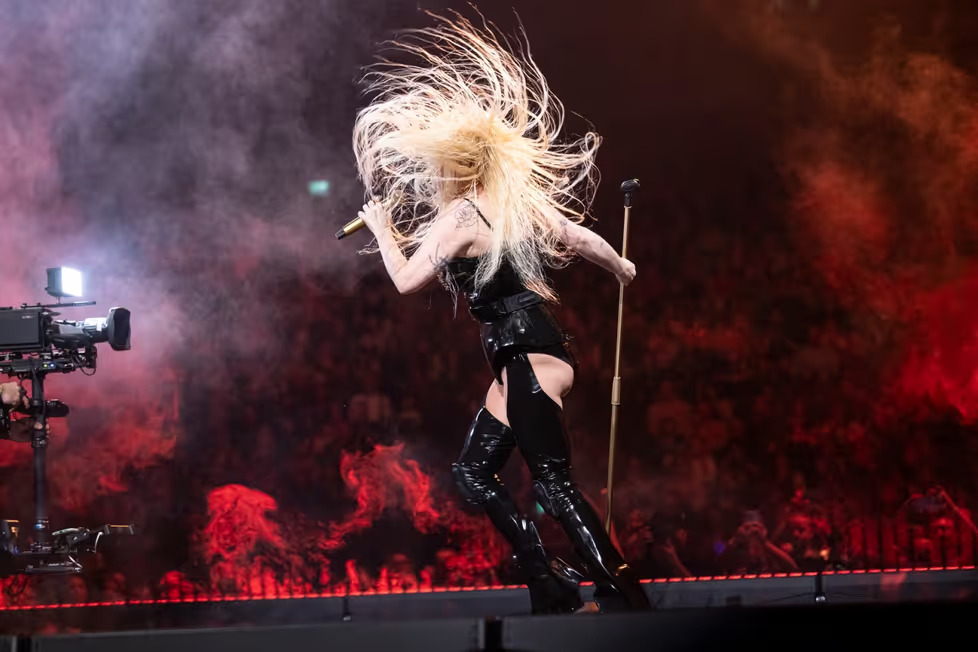
Let’s start with Erika Vikman. You might know her from her collaboration with Käärijä, where they wrote a song about—of all things—a whip. The track explores the love-hate relationship artists have with their critics. Erika describes it best: „It is a great honor to release a song with the craziest and hottest male artist in Finland. Life is like a whip—it drives us crazy but, at the same time, makes us love ourselves. The whip comes, the pain excites.“ You can listen to Ruoska [here].
© Juri Rings
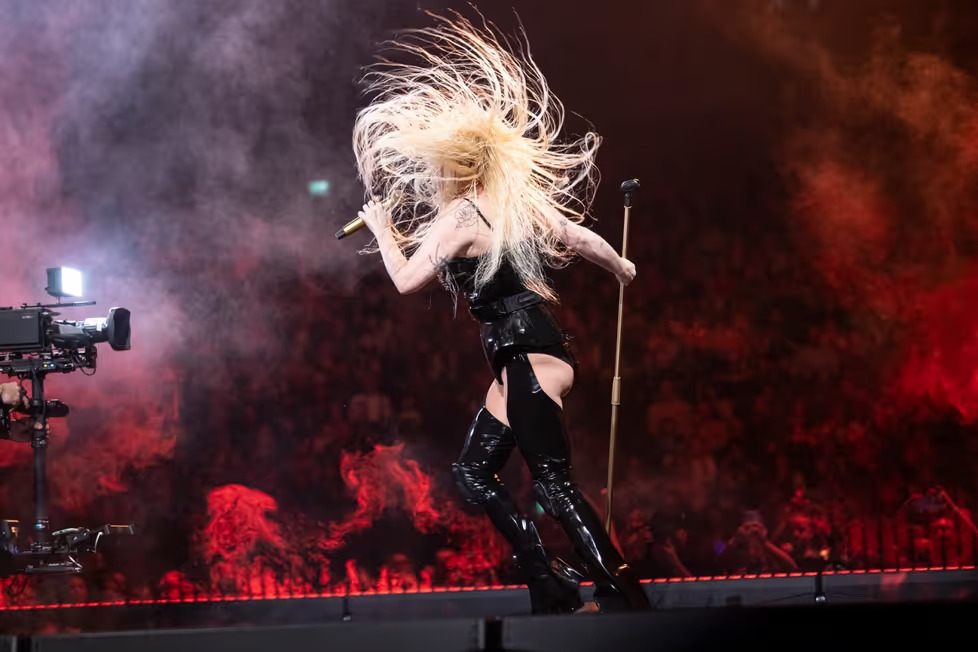
Erika’s unapologetically wild personality takes center stage in Ich komme. The music video features her swimming in gold, wearing a latex bodysuit, pole-dancing with a microphone stand, and singing about sex and orgasm. The bisexual lighting underscores her open support for the LGBTQ+ community. The aesthetic oscillates between „good“ (golden accessories, angelic guitar riffs) and „bad“ (black latex, Rammstein-esque deep vocals), creating a playful contrast between sin and glory. Erika unites the devil and the angel, proving that talking about sex and pleasure—especially as a woman—should be free of shame. Musically, the song blends Finnish disco with rave elements, topped off with Neue Deutsche Härte influences. The cross-cultural references? Simply iconic.
Go-Jo: Serving Milkshakes (and More)
Then we have the Milkshake Man himself. Australia’s Go-Jo cruises in an ice cream truck, but he’s not serving ice—he’s serving milkshakes. And in case you missed the innuendo, Go-Jo clarified on Instagram: „Milkshake Man is about showing your loudest and proudest version of yourself. It’s about finding comfort in your own skin and becoming confident.“ And, in his words, it’s also about, well… cum.
© Jeremy Kees Orr
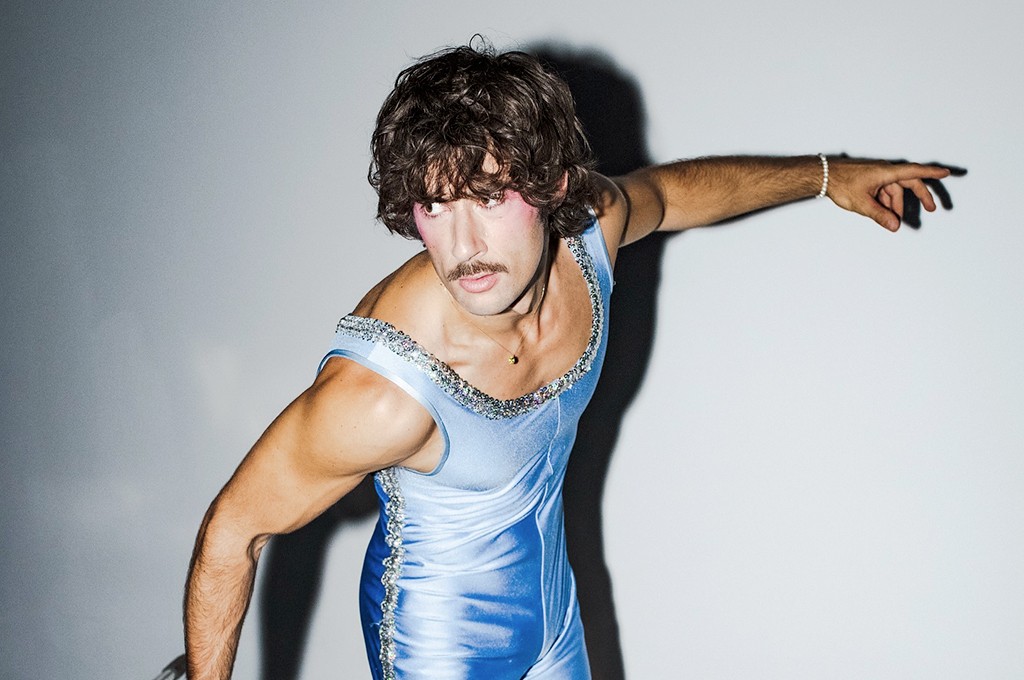
The milkshake is a direct reference to sperm, and the ice cream truck shakes as much as… well, you get the idea. Go-Jo presents himself as a flamboyant showman in a hilariously bizarre blue bodysuit reminiscent of Borat’s iconic outfit. He’s joined by two female clowns who assist in his milkshake-making, while the entire video celebrates him like a pop superstar. The bridge is particularly absurd—Go-Jo and the clowns suddenly don white outfits, feigning innocence while dramatically praising the sweetness of milkshakes in a horror-movie-like fashion. Musically, the song is a chaotic blend of 80s-style synths and guitar riffs, as wild as the Milkshake Man himself. Also, can we talk about how his name Go-Josounds eerily similar to WHAM!?
Marko Bošnjak: Poison Cake
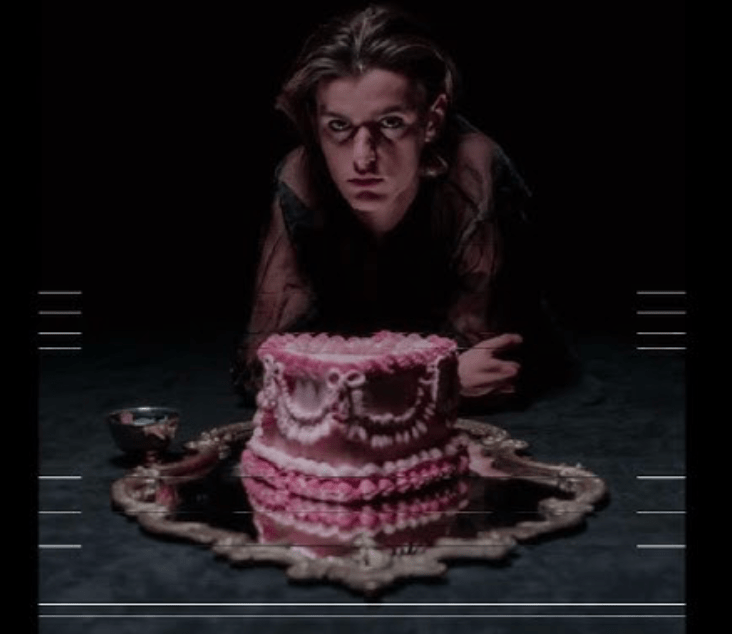
…a completely different kind of sweetness: Baking a cake for your lover is always a sweet gesture – except when it turns out being just as toxic as your ex. Marko Bošnjak plays with this tension between toxicity, danger and love in his song Poison Cake. The song swirls with the angelic voice of Marko praising the „chocolate covered, sugar and spice“ cake in the bridge and the dark, suffocated tone of „Poison Cake“ in the chorus. Markus may bake you something yummy, but don’t expect to feel yummy afterwards.
The performance revels in excess—whether through its jolly and dark vocals, gothic kitchen aesthetics, or the playfully sinister lyrics. The K-pop influence adds another layer to its camp identity, amplifying the polished yet over-the-top nature of the song’s composition with the use of alt-pop, techno, metal and reggae-elements.
From start to finish, Poison Cake is a deliciously twisted spectacle, where love and danger intertwine in true camp fashion—seductive, exaggerated, and just the right amount of menace.
A secret tip from my side which needs to slide into the final…
Miriana Conte: From Kant to „Conte“
Next, we have Miriana Conte’s Kpop-like anthem called KANT, a song packed with triple-layered meaning:
- A reference to the German philosopher Immanuel Kant, a pillar of the Enlightenment.
- The Maltese word for „singing.“
- The controversial English slang for the female genitalia.
Even though Conte denies the latter connection, it’s impossible to ignore the 2024 TikTok trend where women celebrated their unapologetic selves under the hashtag #servingcvnt. Conte’s lyrics encourage self-expression: Wear your crazy outfits, be loud, and stop caring what others think!

© Eurovision Song Malta
Her performance embodies this philosophy—she sports an extravagant striped white dress with turquoise ruffles, layered over a leopard-print bodysuit. The outfit might clash, but that’s precisely the point: camp is about embracing personal style, even if it looks gaudy and distasteful. Conte’s choreography channels the energy of Eurovision legends like Eleni Foureira and Elena Tsagrinou, as she confidently belts and shouts into the mic.
Due to the explicit English meaning of KANT, the EBU has required Conte to change the song title. It will likely be renamed Conte—a compromise that keeps her name in the spotlight.
I can also recommend checking out the Mama Moo’s Hip, they both begin a like with a funky snare rhythm.
Tommy Cash: Capitalist Absurdity
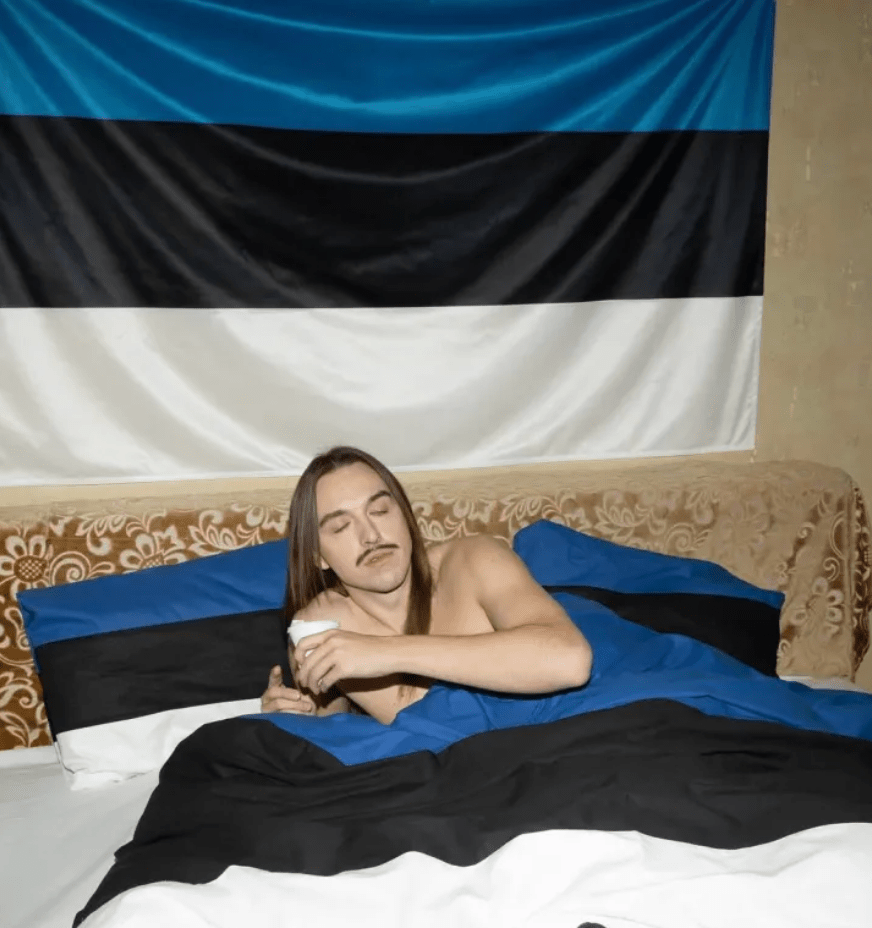
Estonia’s Tommy Cash takes camp to another level with Espresso Macchiato, a satirical take on modern capitalism. The song humorously depicts the struggle of working endlessly to chase success and wealth.
Cash mocks Italian stereotypes, portraying a caricature of „the Italian dream“—he drinks coffee, owns a small restaurant, works like the mafia (implying success in capitalism often involves cheating), and lives in a mansion. The performance is surreal: he spends the entire three-minute video slowly drinking a single cup of espresso macchiato, a clear nod to Andy Warhol’s performance art piece Eating a Burger (1982).
On stage, he’s accompanied by four security guards who treat him like a god. They dance absurdly, jumping around like children and lifting Cash as if he were floating in a private jet. His noodle-like leg movements add to the hilarity. The entire act blurs the line between satire and reality—because, let’s face it, capitalism is absurd.
© instagram.com/tommycashworld
KAJ: Sauna Culture, But Make It Eurovision
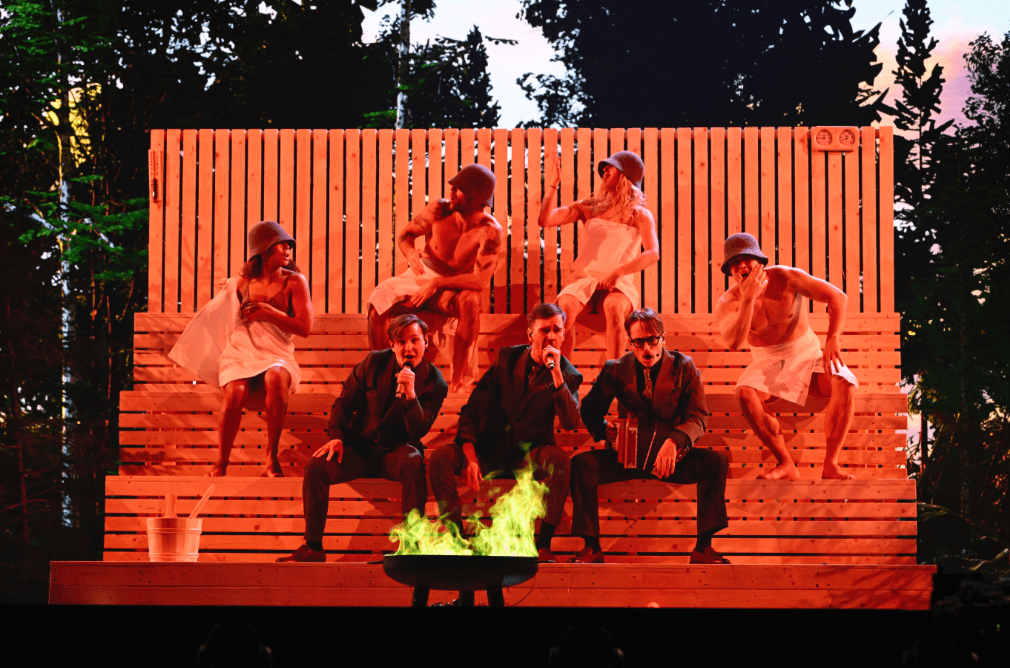
Finally, we have Finland-Swedish group KAJ, who poke fun at Sweden and Finland’s beloved sauna culture. Their act Bara bada basta features three men in old-fashioned uniforms, one playing an accordion, with a backdrop of woodlands and a sauna set. The scene perfectly captures traditional Scandinavian sauna life—complete with Swedish lumberjacks and sauna-goers dancing in the background.
Of course, Eurovision can’t allow full nudity on stage, so the dancers are wrapped in towels. But even with the modesty, the performance leans heavily into absurdity, embracing the quirks of Nordic culture with a campy, self-aware twist.
© Stina Stjernkvist
Eurovision 2025 is shaping up to be the ultimate celebration of camp—a spectacle of flamboyance, satire, and unfiltered self-expression. Whether it’s latex bodysuits, milkshake innuendos, or absurd capitalist critiques, this year’s contest is a glorious, chaotic tribute to everything extra. And let’s be honest: for the 69th edition, especially in this political whirlwind we live in: what else would we expect? 😉
Maybe Europe desperately needs a fever dream at the moment. A possibility to escape for a while and connect with each other without listening to the turmoil that is happening behind the curtains. So that we can come back after the competition feeling more grounded and inspired.
Camp thrives on exaggeration, humor, and artifice, making it both a form of liberation and a means of escaping reality. In today’s political whirlwind—marked by war, climate crises, and rising authoritarianism—camp risks becoming a delusional shield, masking deeper issues rather than confronting them.
Eurovision, long a haven for self-expression, exemplifies this tension. While performances Erika Vikman’s Ich komme or Go-Jo’s Milkshake Man embrace satire and sexual confidence, they can also feel detached from real struggles, turning camp into mere spectacle. In a Europe facing increasing nationalism and restricted freedoms, the competition’s indulgence in excess may serve more as a distraction than an act of defiance.
Camp has always been about bending reality to make it more bearable—but when does that fantasy become denial? The 69th Eurovision may be the most extravagant and trolly yet, but in times of crisis, is it resistance or just another way to look away?
What do you think? Let me know in the comments.
 laratahm
Hinterlasse einen Kommentar