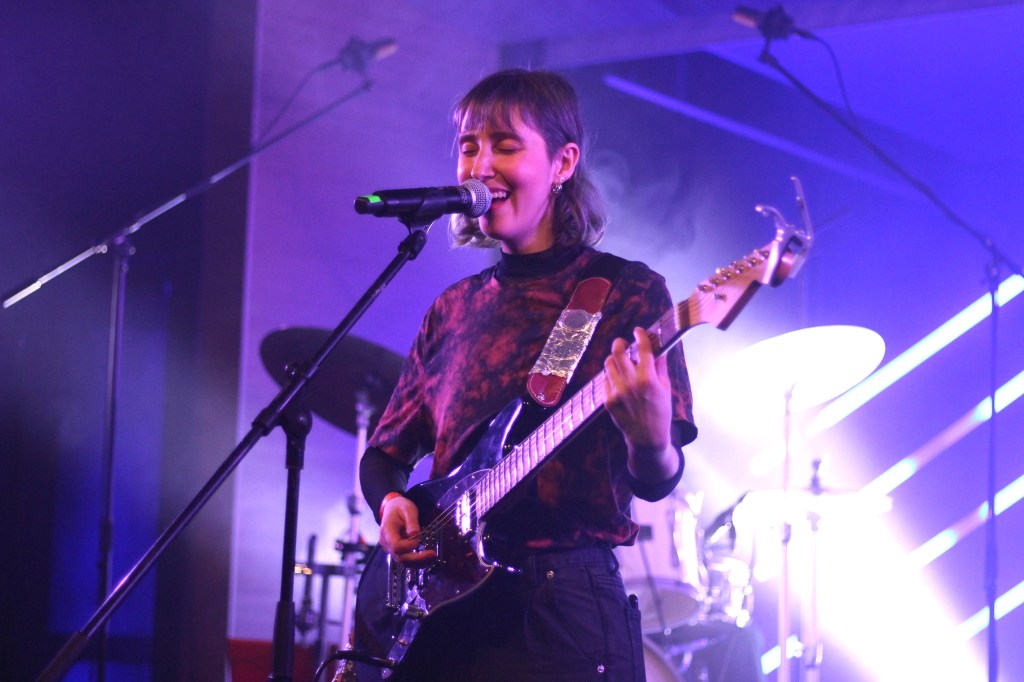
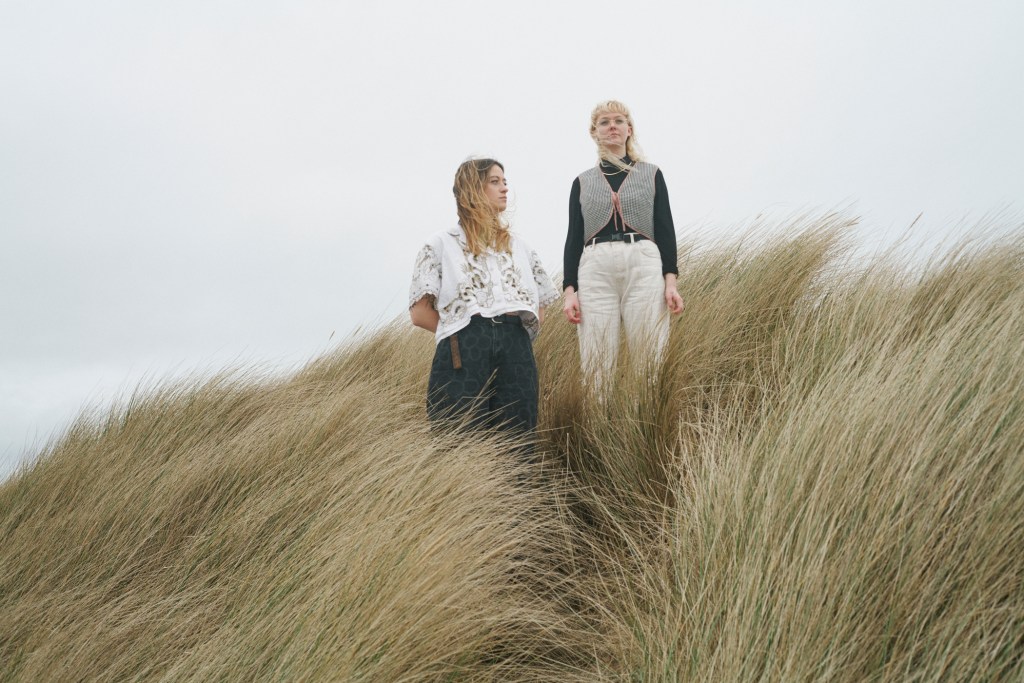
Hailing from Montreal, Corey Gulkin is a non-binary indie-rock artist with a background in folk music. I’ve met them at Tallinn Music Week and I was struck by their unconventional yet honest rock sound. They are best known for their experimental, dark and intricate songwriting. Their debut „Half Moon“ acknowledges the darkness and explores themes of anti-capitalism, queer love and chronic pain.
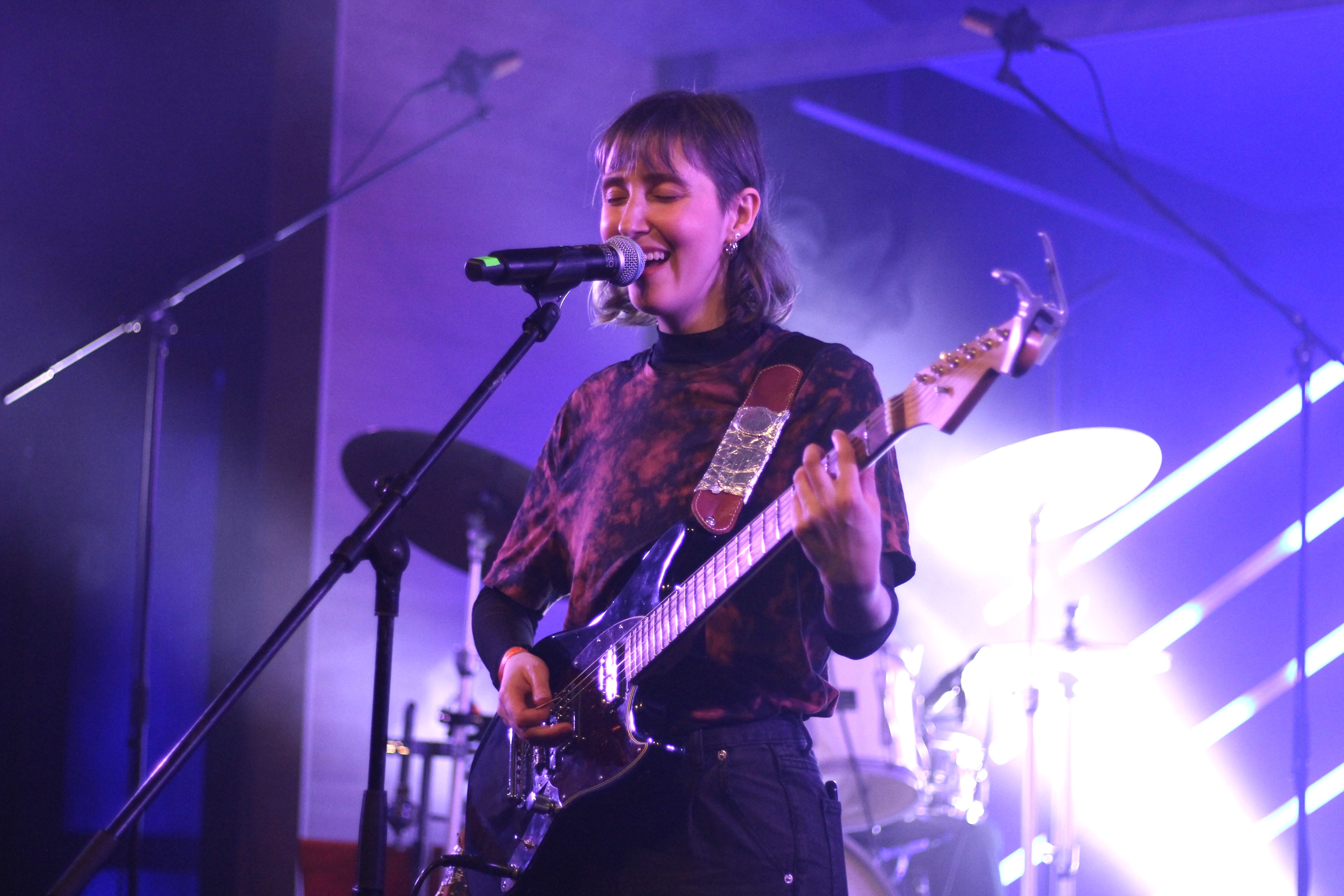
Photo: Danja de Jonckheere
On a Monday evening I sat down with Corey to talk about their creation of Half Moon.
Did you write „Half Moon“ during the pandemic?
Partially. I started writing this record in 2017 and finished the last songs of the record in 2019. During that time I started experiencing chronic pain and I had to stop playing guitar so I switched to playing synths. It was unfortunate that this happened also before the pandemic, because it was quite an anti-social time for me as well as it took be a long time to figure out how to be a person in the real world. So during the pandemic we had to wait 8 months to finish the songs. Everything was finished by July 2021 when the numbers were lower and we were recording without masks long. So it took like five years to work on this record.
Did you become more patient as the process took five years?
When I am connected to creation, I don’t mind when everything is taking some time. It was a very unusual and slow process of writing. It was very detailed and of course there were moments where I was frustrated. I definitely had to be patient with the recording process and also with my health. I did not have a choice, but to be patient. At the end of the day I was glad that I took the time it needed and I’m really proud. Time doesn’t matter so much in the end.
Did you have to learn to listen to your body more?
The trickiest part was not slowing down, but knowing when to push myself. Trying to encourage myself to keep going without going too hard. It was all about finding the right balance and challenge myself as well.
Were there any albums which inspired you in particular during the writing process?
Certainly it was a mix of things. A lot of this album was about finding my internal voice, I was really excited about writing a rock record, before that I was creating folk music. I allowed myself to let all the creatures within to come out, even if it was embarrassing, angry or competitive. I wasn’t holding any parts. There were some specific albums I listened to during this time:
I listened to Moses Sumney’s Aromanticism a lot, I really loved Sam Amidon’s The Following Mountain, this was his only album of originals, it’s very live and loose. I was also listening to Sharon van Atten’s album Remind Me Tomorrow and there is one guitar line which is a reference to that album. The Shape Of Your Name by Charlotte Cornfield: there was a song which inspired Raya quite a lot, the song builds up so much which is also happening in Raya. And then I was listening to my friend’s band Omhouse quite a lot, especially their album Eye to Eye. I love the structures they created, not A – B and the idea of guitarmony – playing a big guitar duet together!
How was it like to record vocals from a tunnel for Magic Square?
For Magic square we wanted this song to sound ethereal and texture-like to bring people into a space of a watery, deep soundscape. We recorded the song in Chez Ballsy, which unfortunately is closed now, in a random tunnel in Montreal at Saint Soubert Street. My producer Sam and I were walking on the street and we found a random stone tunnel. We just spend the time recording vocals so you can hear cars driving by in the sound recording. It added so much depth and humanity to the song.
I also really loved the lyrics „Wish I were a flower / rooted in some soil / with memories of wild abandon“ and I have been wondering myself what does that line really mean? (laughs) The line „with memories of wild abandon“ was really intriguing for me. I was wondering how growth can be connected to abandonment as they both represent the complete opposite?
The phrase „wild abandon“ generally means really uncontrolled and wild. Like doing something without any thought. That song really pictured a moment of depression and moving through dark times. That line was rooted in regret and desire for stability. But in order to have that stability I had to admit that I lived a fearless life before. And now I grow flowers through this collective experience. That longing for my future and being proud of my past.
I loved the line „you can’t espace yourself“ in Therapist.
Yeah, I wanted this song to be very direct. There were some songs which captured really nebulous feelings and then there were other songs like Therapist which were really direct in their message. Like trying to repair with someone who is not in touch with themselves at all.
I saw Aquarium as a metaphor for fitting all your tears and seeing tears through a beautiful lense. I really appreciated that in that song.
I really appreciate that. That was a really vulnerable song to write. It was about depression and holding it in a particular way and it’s also a bit of my experience with anti-depressants. It’s cool to hear other people’s interpretations with that song.
What is „To all the creatures within who rescue us“„Thirty-One“ about?
That line is a very specific Star Trek reference. (laughs) I love that you caught that line: That line was spoken by Lvaxana Troi. She is practically a drag queen and makes friends with little kids on the ship and they go to this space bar. In this one scene she makes a beautiful speech and says that line.
Is „Faceless Woman“ about insecurities and a critic towards capitalism?
Yes, yes. (laughs) I was feeling really competitive and decided to see what happened if I turned this competitiveness into a character. When I wrote the song I had to think of the Simpsons: Homer goes on this psychedelic trip and his wife is mad at him and he keeps running around but he could never get to her face. I liked the idea of putting that image in the song. If you let competitiveness and productivity take over, then what substance is left? What ethics are you still abiding by. It just causes you to lose sight of what matters to you the most. I think capitalism is a pretty destructive system, it creates a lot of disconnection, breaks up community. I could write you a whole essay about it (laughs).
For me, often I thought how psychedelic the record sounded like. Was that for you an intention for the record?
To a certain extent. I rarely write songs with a certain intent, I prefer to follow the flow of the song without feeling restricted by traditional song structures. So that’s why that sounded psychedelic to you.
What does queer love mean to you and how are you connected by that in „Raya“?
Queer love means a lot of different things and it shows up in other songs as well. . The Shape Of Your Name by Charlotte Cornfield: there was a song which inspired Raya quite a lot, the song builds up so much which is also happening in Raya. It’s about my first queer experience and that moment of realization and intensity and delving into that new space and inhabit that.
Queer love is all about asking the big questions. „Breaking the Distance“ is also a song about wanting to do relationships differently which is not traditionally perscribed by society. bell hooks talks about two definitions of queer love: queer as who you are attracted to and then queer as in how do you live your life that is outside the norm and society. So it’s more about those questions like: Do I want to be polyamorous? Am I more solo? How much do I want someone to be merged in my life?
It’s all about finding out in what kind of structures I want to conform to or say goodbye to.
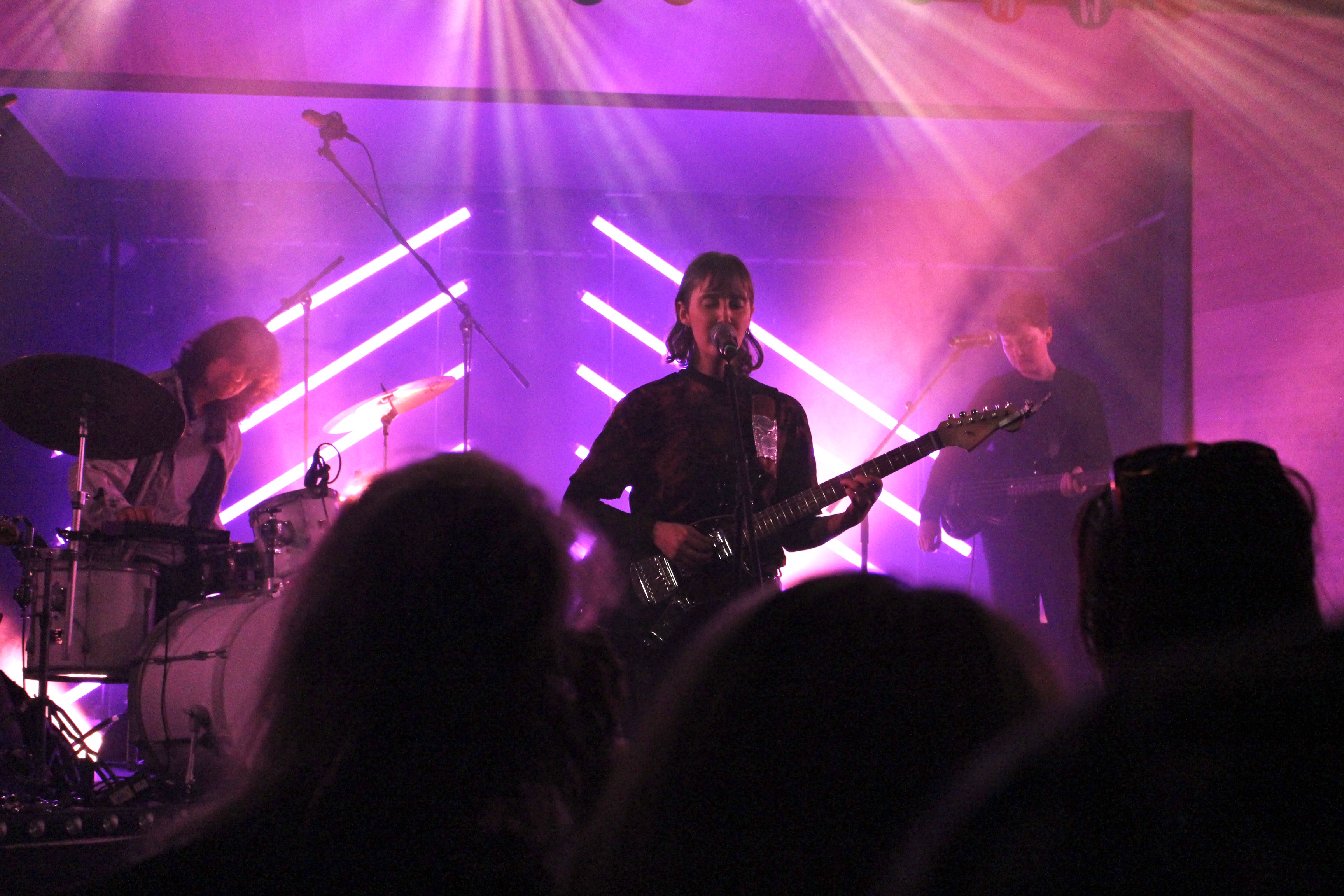
Photo: Danja de Jonckheere
Is Raya a real person or more of an alter ego?
Raya is a bit of a mix. There is a memory attached to it and I have my own creative license where I change, distort, transform this memory. You can see a real person in Raya and there are other elements which are not real.
What is IFS and how is this therapy form connected to your album?
Internal Family Systems therapy is the 80s idea of the inner child and expanding on it. Rather than having one child it says that we have several different versions which came into existence as a form of manager or protector. The goal is that you are in control of your parts instead of letting your emotions ride the bus. It’s more about listening what those parts are telling you, thanking them and then go about your day.
Writing songs for me always has been a form of therapy. I learned that after that recording, that’s when I realized that I was therapeuting myself already. That’s what make me feel connected and spiritual.
Did you have a particular sound you were holding onto when listening to this record?
It was a mix of things. There was a rock energy and energy which I wanted in the album. This was the first record I let someone else produce it. So I let go of control and let somebody make suggestions. Sam Gleason was my producer and he really helped to shape the sound of the record. It was a culmination of my vision which created this big sound. I really wanted it to be big and have an impact, even if I didn’t know what it would sound like.
What plans do you have now for the future?
I’m taking it really slow, I kind of have a writer’s bloc. I have a few songs mostly written and then I will take the time to apply to some grands. Take a break from performing. I’m in a space where not much is happening, but there is so much possibility. Let’s see what happens.
 laratahm
Hinterlasse einen Kommentar