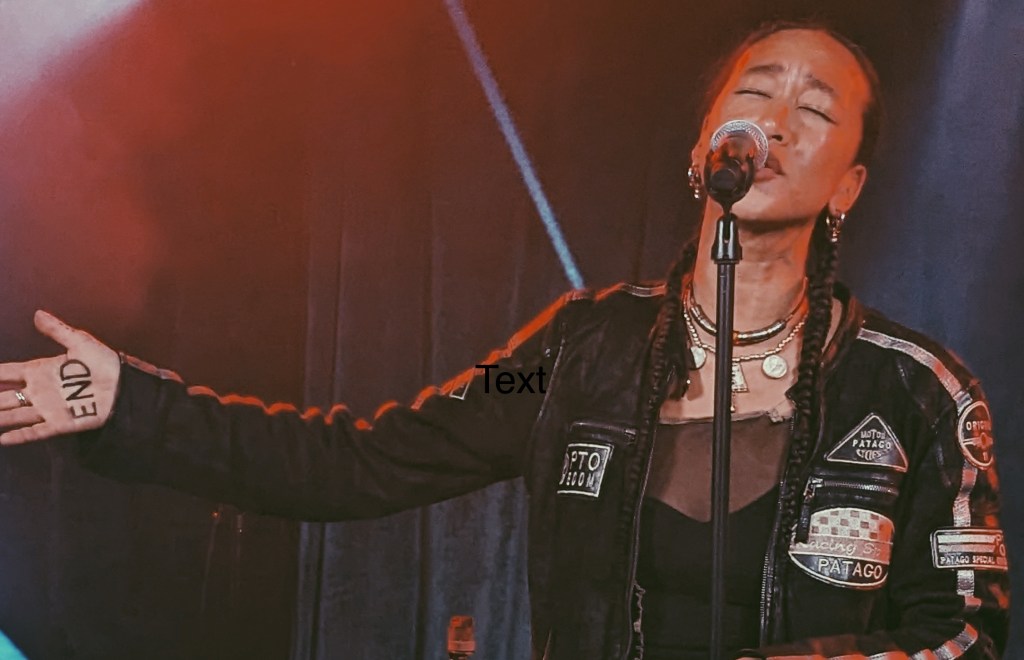
At Tallinn Music Week I had the pleasure to talk to Sophia Mitiku. Sophia Mitiku is a Finnish experimental, alt-pop, r&b artist living in Helsinki. Her debut album „Copacabana“ is all about the idea of love as an escape. In the interview she shares her heritage, upbringing and her process of making her debut album.
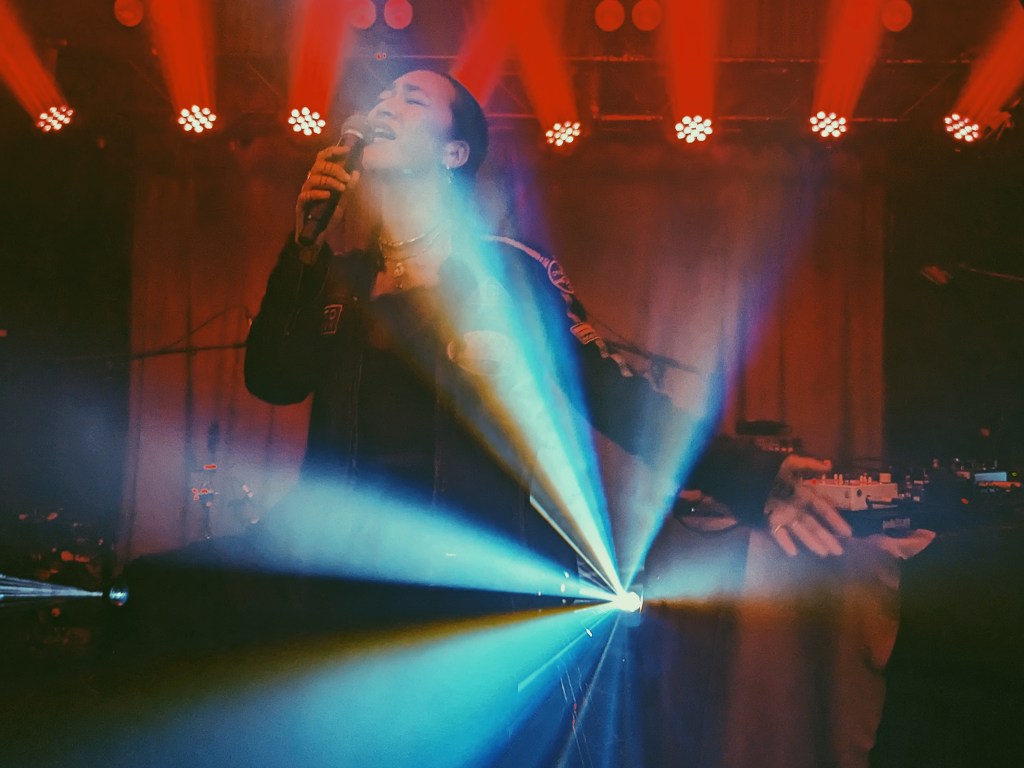
L: How has it been for you living in Helsinki?
S: I’ve been here now for four or five years. Towards the second year I started to find friends and feel more grounded. Before that I was very in and out of Finland and now it’s nice to come here and I feel that Helsinki is now a good base between Korea and Ethopia and also meeting my sister.
L: What is your connection to tropical places in „Copacabana“ as tropical places like Miami and Saigon are mentioned?
S: The whole world was exploring this idea of love as an escape. I was thinking a lot about how people travel to warm places to find a lover. And maybe there is this idea of love as an escape which is somehow tied to a holiday from reality.
L: That makes so much sense, as in these summer flirts you can only make there those connections.
S: There is this small momentum that opens up where you live in this weird island, in this bubble.
L: What inspired you sonically? Did you already have ideas before for the album or were you especially inspired by certain artists? What did the process look like?
S: It was like my first proper thing that I released. And that was the product of like years of producing a lot of stuff that ended up in the recycling bin. Somehow I found my way into the sonic world through the album. The making of the albums was a very visual process as well, making the character and the whole world within that. My visual imagination was more important to me than the sonic one. The imagery helped me to find the right sounds.
L: Especially in your lyrics I could hear your visual connection. Every line is like a statement and sounds very straightforward and immediate. It’s like telling a story in a visual way. I connected to these stories through a lense of heartbreak and how everything opens up and by the end of the album closes down. I could very much be in this world of the record. Were there any particular influences concerning your heritage?
S. It was more this relationship of in-betweenness. The here and before and the future. The fragmented understanding of memory of present nostalgia. In my music there are also products of my upbringing and being immigrated around. These are strong elements in my music. I have a Korean mum and an Ethopian dad and we lived in the United States, in Germany and in Finland. And that kind of gave a layer to the story I was working within that album. It seemed like presenting this kind of memory.
L: There were a few songs which sounded quite dark, but had at the same time some groove in it. Was the creation of songs organic?
S: I think it wasn’t like a conscious thing. I felt like the album needed to swing between realities and I was playing in this irony of contrasted worlds and different extremities that you can reach out to and then snap out of it in the middle.
L: I could hear in your record influences of r&b, experimental music and alternative pop. And then there where also ballads like „Good For You“ where I could hear German lyrics. Where does the German line come from?
S: It’s part from a German song I listened to: „lass uns für ewig und ewig sein“. It is a song that was placed before the 1950s which is also a reference to a different time space. In my head I was translating „für immer und ewig“ to „forever and ever“. It’s interesting to have that extreme „for ever and ever and ever“. The extreme of infinity. It had an interesting way of dramatising. It sounds very quite in the song which I included just for myself to listen to. The translation really stood up for me.
L: In which language do you feel the most home?
S: I’m not saying this to sound abstract, but i feel like it’s the non-verbal language when it comes to certain facial expressions or physical language. The main language in our home was English for a long time. I have certain language barriers with both my parents and I grew up with a lot of language barriers. For example I speak Korean but it’s not on a fluent level, it’s that i can speak with my mom. There are certain gestures and sounds that people make where you can find connection. It’s more about the nuance. The non-verbal language the language I feel home in. Music to a certain extent is also a language I can understand.

L: Do you want to share anything about your new album? When is it coming?
S: It is called all sickness is home sickness. There is still a common theme to the previous album but in a different tone. This idea of like what is longing, what is desire and what is memory and the culture around these things with different trades of diaspora. This idea that being home doesn’t necessarily have to be a country. Homesickness represents to me to be between a person, or memory or a dream or a part of yourself that you leave behind. Finding these different forms of separation and loss and find how it connects to death and rebirth within these different cycles, like our own lifetime that we go through again and again, And that are also like a part of someone else’s, or like someone. I am aiming for spring next year. It’s 70% done so far.
L: Are you producing it yourself?
S: Yes, but I’m trying to practice more collaboration in this record. It also feels important that with these themes I express a wider perspective and translation of these topics. So a handful of people are part of these songs as well. It’s not 100% my own production.
L: Do you feel more confident working now on your music?
S: I think I feel more confident in my creative process, but not confident enough that it wouldn’t have its own hurdles and kind of moments of doubt.
L: Do you have like a favourite song of your first album?
S: I don’t know if i have like a favourite song specifically. But „Good To You“ was my favourite song to perform at least. That was the one song that felt different every time I performed it because the audience is so different. That was the song where I can connect with someone in the audience in an intimate way, and I think that’s why I have a soft spot for that song. Because I ask permission to come close to someone.
L: It has been so nice talking to you I am looking forward to see your performance in the evening. I wish you a wonderful time in Tallinn.
 laratahm
Hinterlasse einen Kommentar